Premier League 2024/25 Teams That Frequently Lead at Half-Time and How They Fit HT Markets
In the 2024/25 Premier League season, some teams repeatedly go into the break in front, making them natural candidates for half-time (HT) betting strategies that focus on early dominance rather than full‑match outcomes. By studying first-half tables and “leading at half-time” records, you can target clubs whose patterns support HT bets more reliably than simply backing the strongest names on reputation alone.
Why Half-Time Leaders Matter for HT Betting
Teams that often lead at half-time usually combine fast starts, clear attacking plans and enough control to convert early pressure into goals within the first 45 minutes. These characteristics matter for HT markets because prices there depend less on late-game management and more on how quickly a side turns chances into a first breakthrough, which is a different skill than closing out matches.
Focusing on half-time leaders also separates them from teams that build their success on late rallies or second-half adjustments, who may be excellent over 90 minutes but unreliable in the HT market. The impact is that a clear first-half edge becomes a distinct angle: instead of betting blindly on full-time favourites, you can selectively target those that actually show repeatable early-game dominance.
What the 2024/25 First-Half Tables Actually Reveal
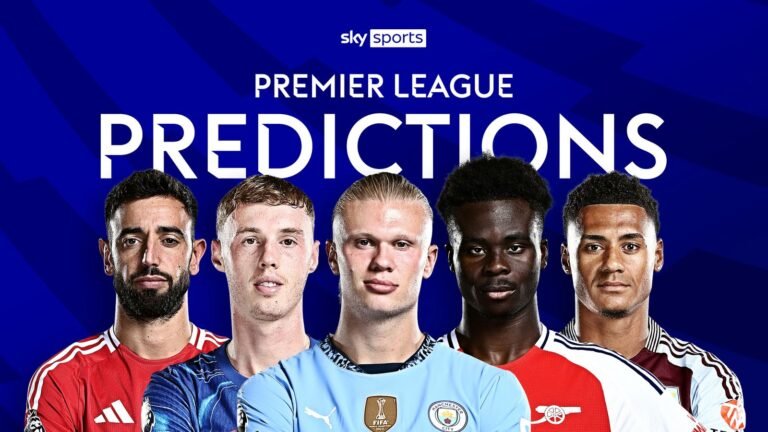
First-half tables for the Premier League rebuild the league as if all matches ended at 45 minutes, showing points, goals for and goals against in that window. The 2024/25 first-half table from 1x2stats places Arsenal, Manchester City and Liverpool at the top, with Arsenal earning 73 first-half points, Manchester City 69 and Liverpool 66, all with strong goal differentials before the interval.
Complementary “leading at half-time” stats show how often teams actually go in front at the break; for example, Manchester City led at HT in roughly 16 of 24 observed matches (about 67%), while clubs like Manchester United, Everton and Bournemouth posted more moderate but still notable rates around 9–10 HT leads in 24 games. For HT betting, this means you can combine the first-half points table with explicit leading percentages to identify teams that not only avoid trailing but actively convert early superiority into HT leads.
Teams With Strong First-Half Profiles in 2024/25
The first-half standings suggest that a cluster of clubs consistently handle the opening 45 minutes better than the rest of the league. Arsenal top the first-half table with 20 first-half wins, 13 draws and only 5 losses, scoring 33 and conceding just 14 in that period, indicating both early control and defensive security. Manchester City follow with 19 wins and 41 first-half goals, supporting the idea that they not only dominate possession but also turn that control into early scoring.
Liverpool, Newcastle and Brentford also stand out, each posting more than 60 first-half points and healthy goal differences, reinforcing their reputations as sides that come out strongly rather than easing into games. Meanwhile, Chelsea and Brighton build respectable first-half records that reflect solid early structures, even if full-time results sometimes fluctuate due to second-half volatility. For HT market logic, these teams become primary candidates whenever opponent quality and context do not completely neutralise their usual early advantages.
Table: First-Half Strength Signals for HT Markets
Before translating these numbers into bets, it helps to organise the key first-half indicators that make certain teams attractive HT candidates. The table below summarises several 2024/25 signals drawn from first-half standings and leading-at-HT stats that relate directly to HT betting suitability.
| Team | First-half points (2024/25) | First-half W–D–L | Goals for / against (HT) | Indicative HT signal |
| Arsenal | 73 | 20–13–5 | 33–14 | Frequent early leads, strong control before break |
| Manchester City | 69 | 19–12–7 | 41–22 | High first-half scoring and sustained pressure |
| Liverpool | 66 | 19–9–10 | 40–20 | Aggressive starts with regular HT advantages |
| Newcastle | 63 | 18–9–11 | 37–23 | Early intensity and consistent first-half output |
| Brentford | 62 | 16–14–8 | 35–25 | Often ahead or level at HT, useful for HT DNB angles |
These numbers show why some teams are more reliable HT propositions than others: they build enough early pressure to take leads, yet keep first-half goals conceded relatively low, which supports HT win and HT double‑chance strategies when conditions are favourable. For bettors, the implication is that you should start HT analysis with these structural signals before adjusting for opponent style, venue and schedule.
Mechanism: What Makes a Team a Good First-Half Bet?
Teams that consistently lead at half-time usually combine three factors: structured early pressing, rehearsed attacking patterns for the opening phases, and a tactical bias toward scoring first rather than controlling risk. They often push aggressive pressing triggers in the first 20–25 minutes, use set-piece routines designed for early impact, and keep defensive lines relatively high to compress the pitch, increasing the frequency of high-value turnovers.
Analytically, this shows up in metrics like early expected goals (xG) and first-half shots, which tend to be above league averages for strong HT sides, and in tables tracking how often they avoid trailing at the break. The impact is that their probability of being ahead at 45 minutes is not random; it is the product of deliberate tactical emphasis on early control, which gives structure to HT win or HT handicap bets when combined with suitable pricing.
When First-Half Strength Fails to Translate Into Value
Even strong first-half teams do not always offer value in HT markets, because prices can fully or even over‑reflect their reputations. If bookmakers and the wider market heavily weight first-half records, the odds on HT wins for top sides can become too short, leaving little edge once you consider variance, opponent match-ups and occasional rotation.
Context also erodes first-half edges: away games in hostile stadiums, congested schedules, and rotated line-ups can dampen early intensity or encourage more cautious starts, even for typically aggressive teams. For bettors, the failure mode is treating first-half strength as an automatic green light; instead, it should be a starting point that must be cross‑checked against situational factors before concluding that the HT price is genuinely attractive.
Data-Driven Betting Perspective on HT Markets
Taking a data-driven betting angle means using first-half statistics as part of a systematic process rather than chasing names or narratives. A robust HT workflow draws on first-half tables, “winning or losing at half-time” records, early goal frequencies and 0–0 HT rates to quantify how often each team is ahead, level or behind after 45 minutes.
You then combine these probabilities with your own assessment of opponent strength, home/away splits and schedule effects to build expected HT outcomes that can be compared to the odds on offer. The practical impact is that HT bets become extensions of your model rather than hunches; you only back first-half leaders when the price suggests the market is underestimating their early edge in a specific fixture.
Sequence: From First-Half Data to a Concrete HT Bet
Once the core numbers are in place, converting them into a specific HT bet follows a logical sequence.
- First, you identify teams with strong structural first-half performance using tables that simulate the league at 45 minutes and records of leading at the break.
- Second, you filter fixtures by context—home or away, opponent’s early-goal tendencies, rest days and likely line-ups—to see whether normal patterns are likely to hold.
- Third, you compare your estimated HT probabilities with the market’s HT 1X2 and HT handicap odds to decide whether any price meaningfully exceeds your modelled edge.
If any step fails—weak context, poor pricing or uncertain line-ups—you skip the bet, which prevents overextension and keeps HT markets as a focused, high‑quality subset of your overall strategy.
Using UFABET as Part of an HT-Oriented Process
When someone has already built a framework around first-half tables and leading-at-HT stats, the next question is how their analysis interacts with specific betting environments, especially where half-time markets are prominently displayed. In that scenario, a bettor might treat auto ufabet as the betting platform where their HT-focused opinions are executed: they could pre‑tag 2024/25 fixtures involving strong first-half sides, then compare their own HT probability estimates with the HT odds on screen, only taking positions when the discrepancy is large enough to justify risk instead of reflexively backing popular teams to be ahead at the break.
Managing HT Focus Within a casino online Ecosystem
Working with half-time statistics requires concentration, yet many bettors access HT markets inside broader multi-product environments that encourage quick, impulsive decisions. Inside a casino online website, for instance, the presence of rapid, non‑football games can subtly push users toward higher volume and away from the measured, data-based approach that HT analysis demands.
A practical response is to ring‑fence HT betting as a deliberate, rule-based activity: you only place half-time bets on Premier League 2024/25 matches where your pre‑match first-half analysis is complete and you can clearly articulate why the odds misprice one team’s early edge. By consciously treating other games in the same environment as noise rather than additional opportunities, you preserve the link between first-half statistics and your decisions instead of letting short-term novelty dilute a carefully built HT strategy.
Summary
In the 2024/25 Premier League, first-half tables and “leading at half-time” records highlight teams like Arsenal, Manchester City, Liverpool, Newcastle and Brentford as repeated early leaders, making them natural candidates for HT markets when context aligns. Using this information in a structured way—through first-half standings, leading percentages and conditional filters around venue, schedule and opponent—turns HT betting from intuition into a more grounded, data-driven exercise.
At the same time, first-half strength does not guarantee value; prices, rotation and match conditions still determine whether an HT bet is justified in any given fixture. By combining half-time statistics with disciplined selection and clear rules about when to abstain, bettors can align their HT positions more closely with how Premier League matches actually unfold in the first 45 minutes of the 2024/25 season.